A biography video often needs scenes that no camera recorded. The temptation is to fill the gap with an evocative childhood room, a lonely train platform, or two people sharing a private conversation. Those images may feel emotionally right. They can also turn an unknown detail into an apparent fact.
The safer distinction is between biography and atmosphere. Biography states what happened, who was involved, and when. Atmosphere gives a verified fact an emotional or visual setting without adding a new claim. A generated draft must stay on the atmospheric side of that line.
Split Known Facts from Visual Atmosphere
Start with a claim ledger built from the sources the editor is allowed to use. Each row should contain one fact, the source, the date it was checked, and any uncertainty. “Moved to the city in 2012” is a claim. “Felt completely alone on arrival” is another claim, and it needs its own support.
Beside each fact, create a separate atmosphere field. It may specify pace, colour, weather, texture, or camera distance, but it may not add an event or relationship. “Restrained, cool-toned arrival sequence” is atmosphere. “Arrives in a storm after arguing with a parent” invents both conditions and conflict.
Mark facts as confirmed, attributed, disputed, or unknown. Confirmed facts can be stated directly. Attributed claims need a visible or spoken source cue. Disputed details require both positions or exclusion. Unknown material belongs only in abstract treatment, never in a literal reenactment.
Convert the Biography into Claim-Sized Scenes
Break the script so each scene carries no more than one biographical claim. This makes visual implication easier to audit. When a scene combines a move, a new friendship, and a career decision, one attractive image can accidentally assert all three.
| Scene layer | Allowed content | Review question |
| Claim | Sourced event, date, role, or quote | Which source supports it? |
| Context | Verified place or public condition | Is it valid for that time? |
| Atmosphere | Nonfactual mood and visual rhythm | Could it be mistaken for biography? |
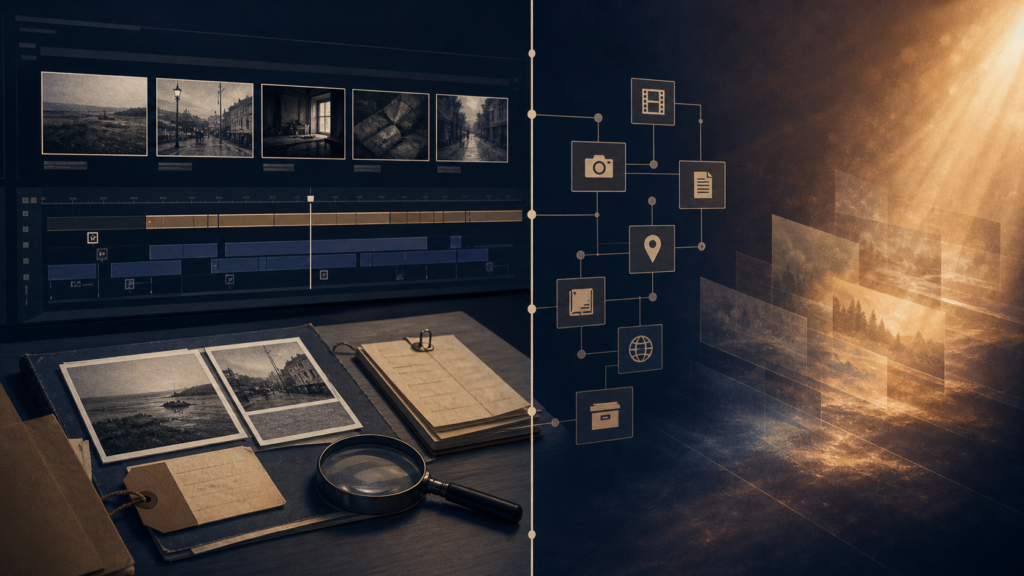
Write the narration first and underline the exact words that make the claim. Then choose picture evidence. A dated photograph, credited interview clip, document, or plainly labelled map can carry factual weight. Abstract light, texture, and movement can support tone, but should not impersonate an unavailable record.
Transitions need the same discipline. A dissolve from one person to another can imply intimacy, influence, or succession even if the script states none. Place a neutral title card or a sourced connecting sentence between scenes when the relationship is not self-evident.
Quotes are not general narration. Keep the speaker, publication, and date attached to the quoted words, especially when the source describes a memory many years later. If the quotation is shortened, preserve its meaning and mark the edit in the production record. A cinematic voice cannot turn recollection into contemporaneous proof.
Draft Motion Around One Verified Reference
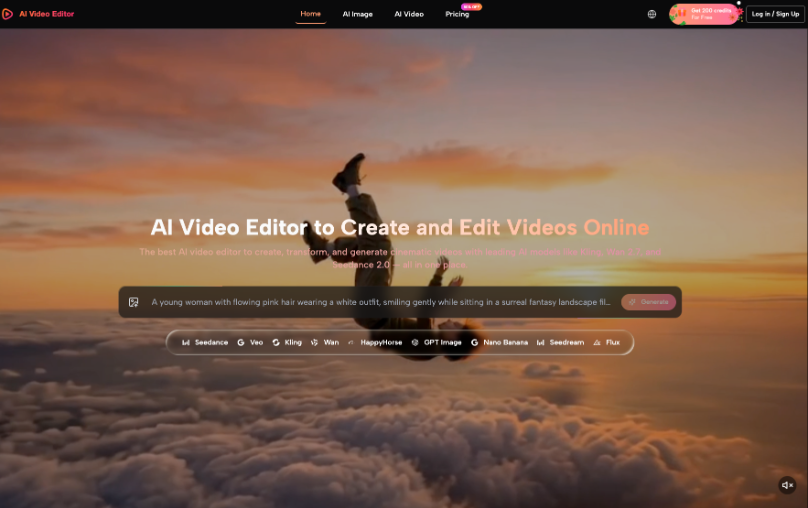
AIVideoEditor.me offers prompt-led transformation of existing footage and also presents image-to-video and other generation routes. Its editing guidance describes uploaded material plus a plain-English change request, followed by a generated version that must be reviewed. Because the site does not promise frame-perfect control, the reference and ledger remain the approval authority.
Select one scene whose factual content is already bounded. The instruction might say: “Create a restrained sense of forward movement around this licensed station photograph. Keep the architecture, date marker, clothing details, visible people, and documentary status unchanged. Do not add meetings, gestures, or readable signs.”
An AI video editor can turn that direction into a candidate, but it cannot determine whether an added glance implies a relationship. Save the exact reference, crop, prompt, and generated version together so the reviewer can compare what was supplied with what appeared.
If no suitable reference exists, use a nonliteral bridge: a route line, a date card, a close study of a verified object, or an abstract change in light. A generic face meant to represent the subject’s younger self creates identity evidence that the production does not possess.
Name the AIVideoEditor.me candidate after the claim ID, not after the intended emotion. “C14-v2” keeps discussion attached to the record. “Lonely-arrival-final” quietly promotes an interpretation to fact before the review has begun.
Reject Images That Imply New Biography Facts
Review each scene with narration muted. Write down what the picture alone appears to claim about place, date, relationship, emotion, wealth, health, and causality. Then compare that list with the claim ledger. Any extra item is drift even when it seems plausible.
Pay special attention to faces and gestures. A handshake implies a meeting; a uniform implies a role; a hospital corridor implies illness; a cheering crowd implies public reception. These are not neutral decorations. Remove or relabel them unless the scene’s source supports the inference.
Use three outcomes. Pass means every literal implication maps to the ledger. Abstract means the image establishes mood without depicting a specific unsupported event. Reject means it invents or overstates biography. A polished reject should not be repaired with a disclaimer if the central picture remains misleading.
Narration returns for a separate chronology pass. A cut can move a verified event beside the wrong year or make a later achievement appear to cause an earlier decision. Keep visible dates long enough to read, and do not let music-driven pacing collapse separate periods into one apparent sequence.
Ask one reviewer to watch only the scene order and another to inspect only claim support. The first catches causal implications created by adjacency; the second catches unsupported detail inside individual shots. Combining their notes is more reliable than asking one person to remember every date, relationship, costume, and transition at once.
Publish the Timeline with Its Evidence Trail
The handoff package should include the claim ledger, source copies or citations, rights notes, prompt, reference, approved candidate, and a list of abstract scenes. Someone reviewing the piece months later should be able to distinguish what the video knows from what its art direction merely suggests.
When producers edit videos online, keep the original source and the candidate in separate folders. AIVideoEditor.me can help test movement and mood, but the editorial team owns the boundary between atmosphere and biographical assertion.
Correct the video when a reliable source changes the record. Preserve the earlier ledger with its review date rather than overwriting it, then regenerate or recut only the affected claim-sized scenes. This limits the correction and makes the editorial history visible.
Publication metadata should name the biography’s coverage window. A video about an active public figure is not a permanent summary, and a later role or corrected date may alter its framing. A visible “sources checked through” note gives editors a practical trigger for review without pretending the record can never change.
Biography becomes trustworthy when every literal image can answer a simple question: what supports this? Atmosphere can be expressive, but it must never smuggle an event, relationship, or motive into the record. The claim–scene matrix gives creative motion a clear boundary and gives viewers a story that does not pretend to know more than its evidence.